some housekeeping before we begin;
this is an extract from my Grow Your Business With Content pack. i’m sharing this section for free to you guys but if you want to read some of the other sections, here are some of the links
how to pick the right social platform for your brand
the 15 minute daily habit that built my entire audience
how i write instagram posts that still get 100k+ views
but today’s edition is about finding the right rhythm heading into the new year
it’s not about being creative. it’s about being consistent.
i used to think i needed some magical burst of inspiration every time i sat down to create content. i’d stare at a blank screen, waiting for the perfect idea to hit me. spoiler alert: it never came.
then i realized something that changed everything: the creators who seem “naturally creative” aren’t more talented than everyone else. they just have better systems.
the content creation lie everyone believes
we’ve all been sold this story that content creation is this mystical, artistic process. that you need to wait for inspiration to strike. that great content just “flows” out of truly creative people.
complete nonsense.
here’s what actually happens: successful marketers treat content like any other business process. they have systems, frameworks, and schedules that remove the guesswork.
they don’t wait for inspiration. they create conditions where good content can happen consistently.
the schedule that changes everything
remember that document you found about content schedules? let me expand on that because this is where most people get it completely wrong.
everyone thinks they need to post every single day to “win” at content creation. but here’s what i’ve learned after working with hundreds of creators: consistency beats frequency every single time.
it’s better to post high-quality content twice a week for two years than to post mediocre content every day for two months and burn out.
the four scheduling approaches that actually work
1. schedule & forget
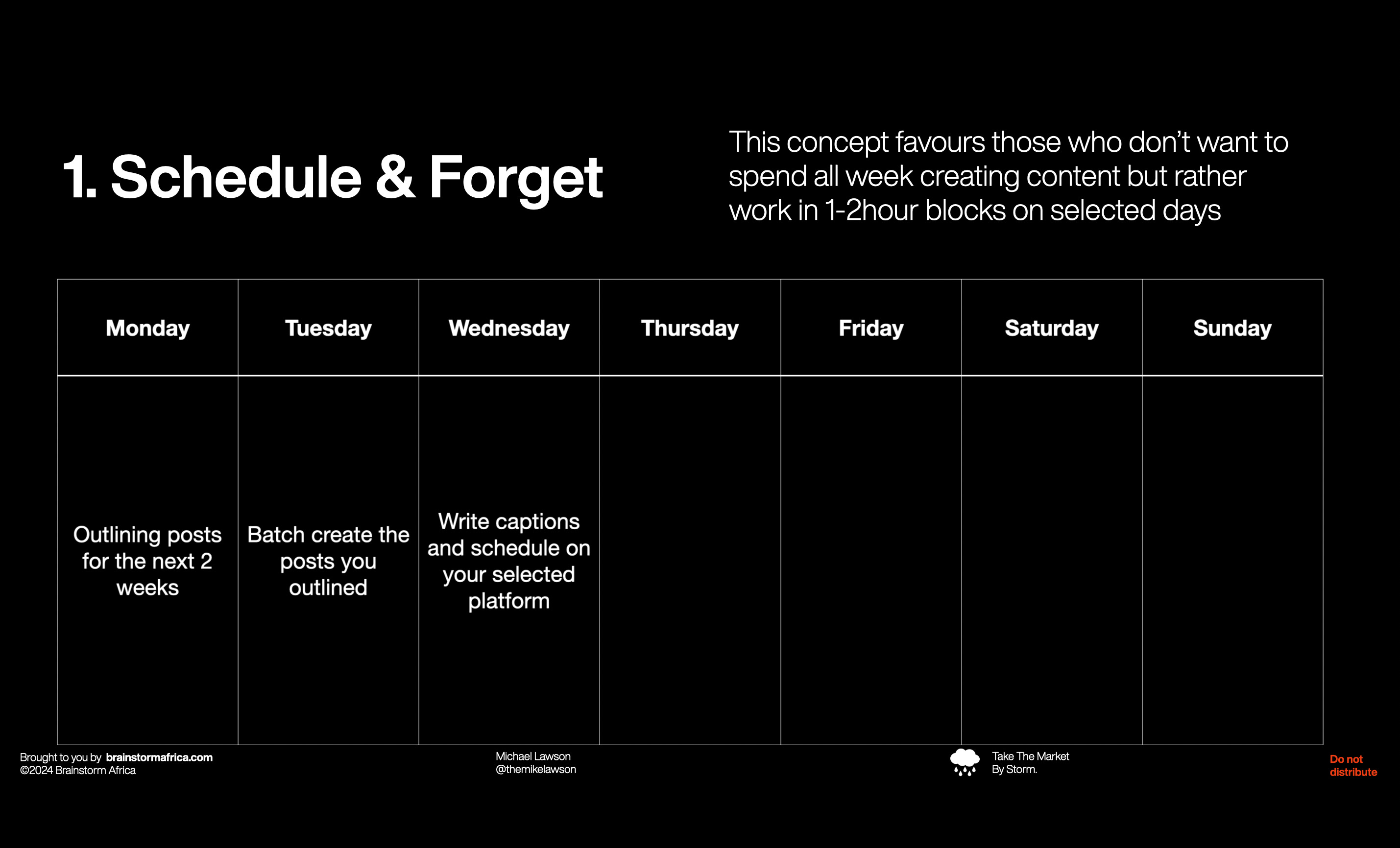
this is perfect if you’re already running a business and don’t want content creation to take over your life.
how it works:
dedicate 2-4 hours on sunday (or whatever day works for you)
create all your content for the week in one session
schedule everything to go out automatically
spend the rest of the week engaging with comments and building relationships
who this works for: business owners, consultants, anyone with unpredictable daily schedules
the key: when you sit down for your content session, you’re in “creation mode.” no distractions, no other tasks. just pure content creation.
2. daily creator
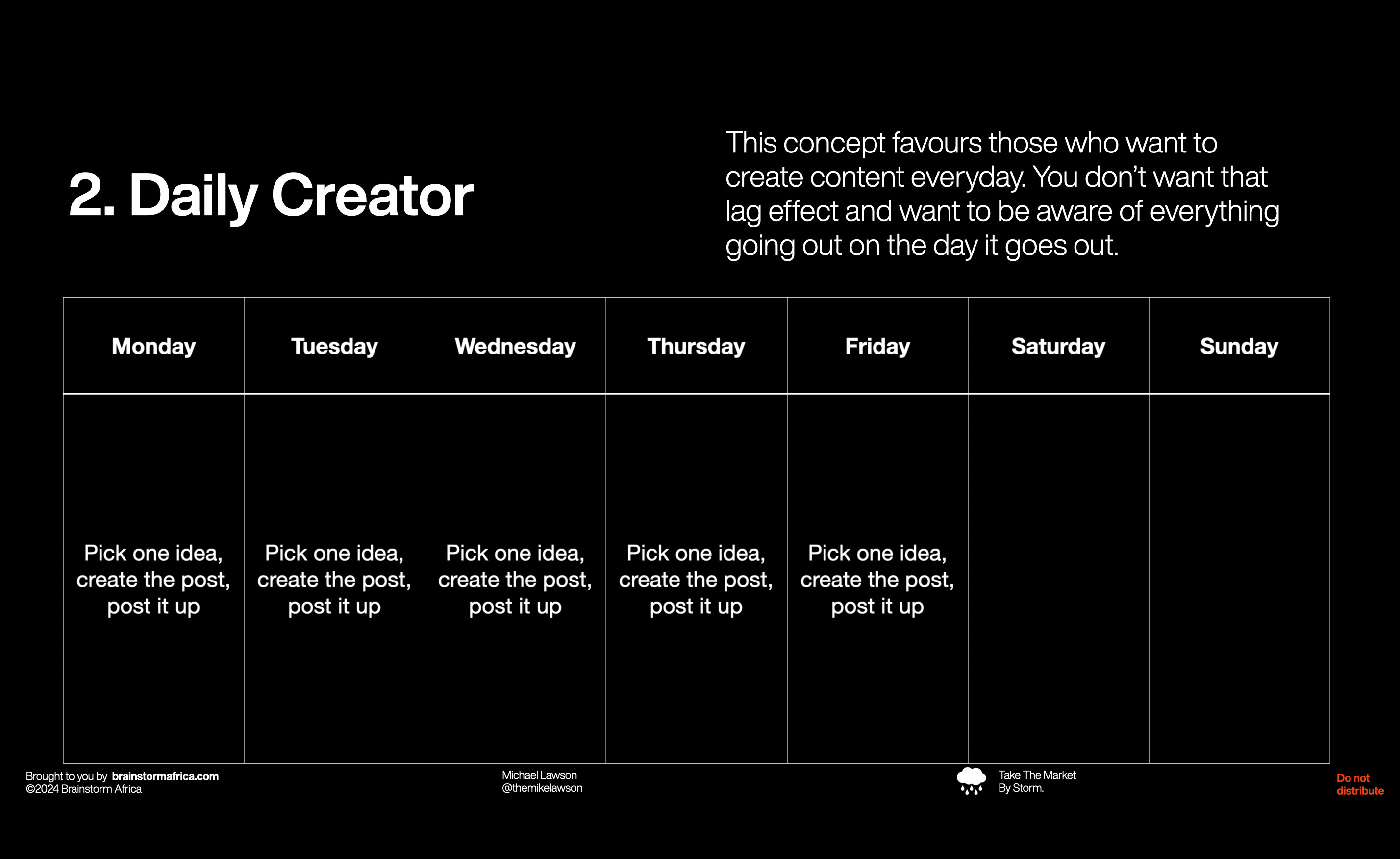
this approach works if you want to stay connected to trends and current conversations in your industry.
how it works:
spend 30-60 minutes each morning creating content
post it that day
stay aware of what’s happening in real-time
adjust your content based on immediate feedback
who this works for: people in fast-moving industries, those who love being “in the moment,” creators who feed off daily interaction
the key: you need a content idea system (more on this below) because you can’t afford to sit there wondering what to post about.
3. hybrid creator schedule
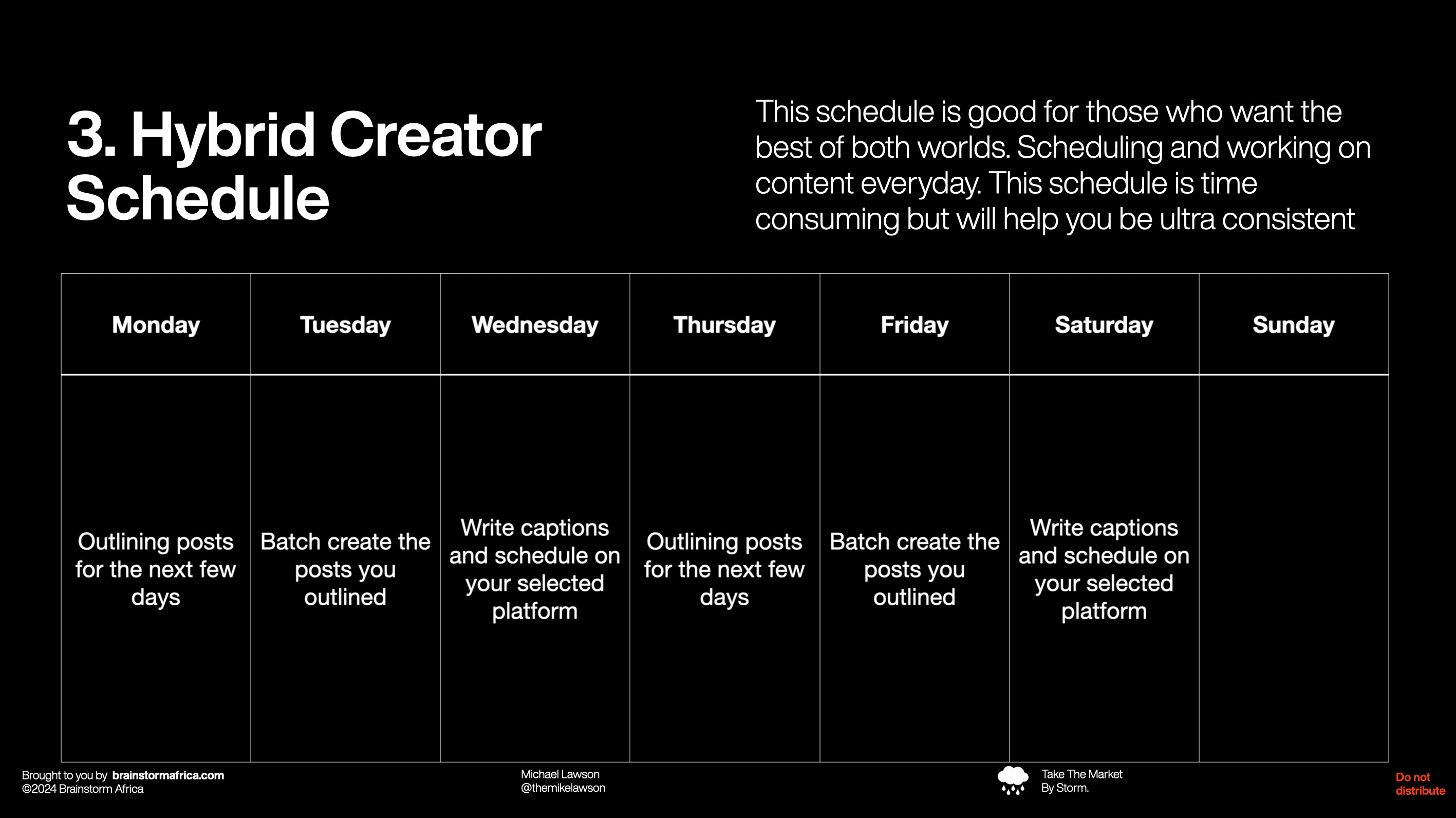
this is my personal favorite, but it’s also the most time-intensive.
how it works:
batch create foundational content once a week (educational, evergreen stuff)
create reactive/trending content daily
mix scheduled posts with real-time content
always have a content bank to pull from
who this works for: people who want to grow fast, those who enjoy content creation, creators who want the best of both worlds
the key: you need to be disciplined about both the batch creation sessions and the daily content habit.
4. you’ve hired an expert schedule
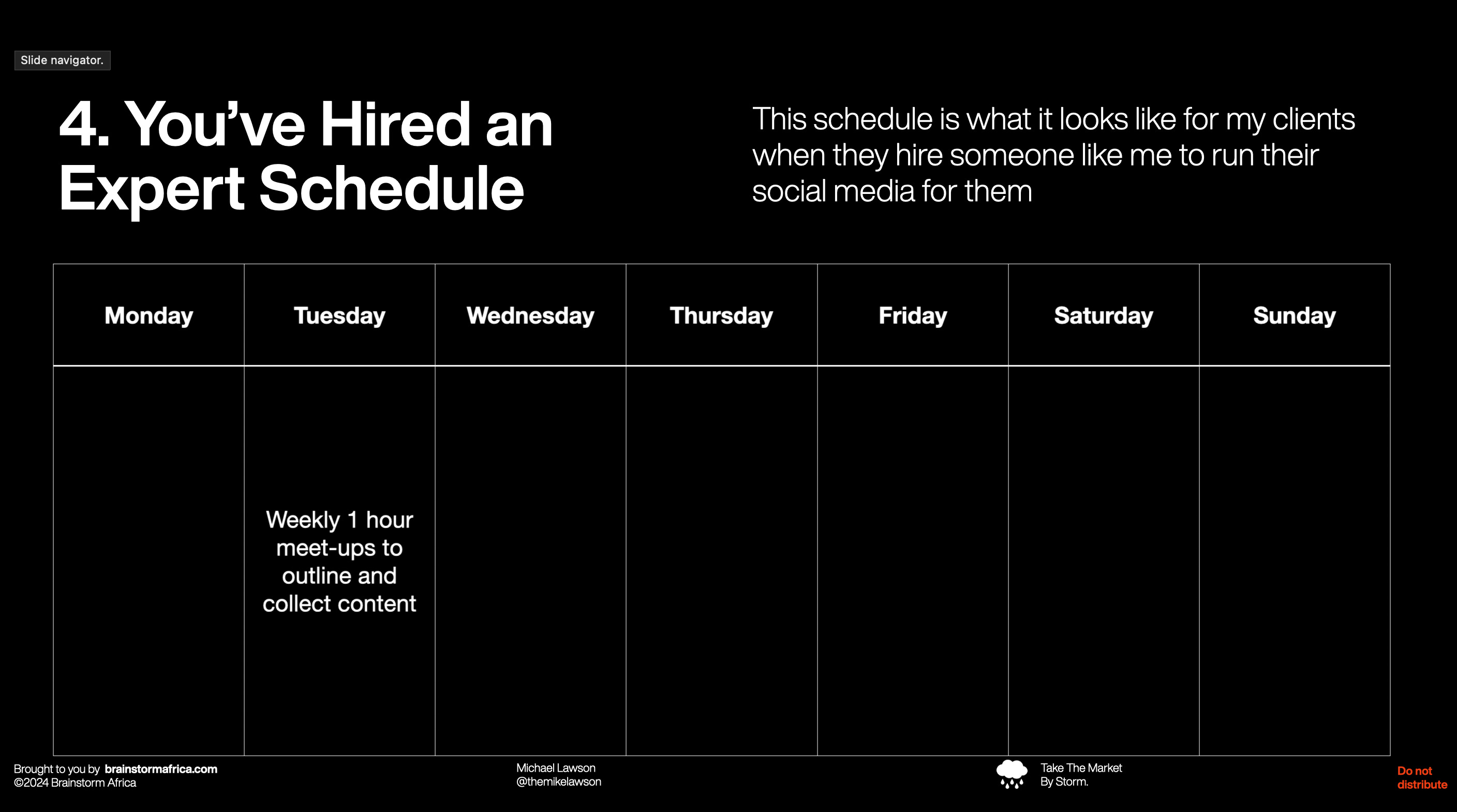
this is what it looks like when you have someone else creating your content.
how it works:
monthly strategy sessions to plan content themes
regular check-ins to review performance and adjust
you provide expertise and feedback, they handle creation and posting
you focus on engagement and relationship building
who this works for: established business owners who can invest in content creation help
the key: even when someone else is creating your content, you still need to be the face and voice of your brand.
the first 6 weeks: why most people quit
here’s the brutal truth: the first 6 weeks of any content schedule are going to suck.
not because your content is bad (though it might be at first). but because building a content habit is like building any other habit. your brain is going to resist it.
you’ll have days when you don’t want to create anything. you’ll second-guess every post. you’ll wonder if anyone actually cares about what you’re sharing.
this is normal. this is expected. this is not a reason to quit.
every successful content creator went through this phase. the difference between the ones who made it and the ones who didn’t? they pushed through those first 6 weeks.
after 6 weeks, something magical happens: content creation becomes automatic. you stop overthinking every post. you develop a sense for what your audience wants. you build momentum.
if you can make it through 6 weeks, you’ll become a content creating machine.
the content idea system that never runs dry
the biggest obstacle to consistent content creation isn’t time or skill. it’s running out of ideas.
here’s my system for never having that problem again:
the three content buckets
every piece of content you create should fall into one of these three categories:
1. educational content (teach) answer questions your audience asks regularly. share lessons you’ve learned. break down complex topics into simple explanations.
2. behind-the-scenes content (show) give people a peek into your process, your struggles, your wins. show the human side of what you do.
3. opinion content (think) share your perspective on industry trends, common misconceptions, or controversial topics. take a stand on something that matters.
the idea capture system
step 1: carry a notes app everywhere when someone asks you a question, write it down. when you have a random thought about your industry, capture it. when you see something that annoys you, note it.
step 2: the weekly idea audit every week, look through your notes and categorize them into your three content buckets. aim for 2-3 ideas in each bucket per week.
step 3: the content calendar plot these ideas onto your posting schedule. don’t worry about making them perfect - just get them on the calendar.
the content multiplication framework
here’s how to turn one good idea into multiple pieces of content:
start with one core insight or lesson
linkedin post: professional angle, industry implications
instagram carousel: visual breakdown, step-by-step process
tiktok video: quick tip, behind-the-scenes explanation
twitter thread: detailed breakdown, personal story
email newsletter: deep dive, personal experience
same insight, different formats, different audiences.
the engagement strategy nobody talks about
creating great content is only half the battle. the other half is getting people to actually see and engage with it.
the 80/20 rule of content success
80% of your content’s success comes from 20% of your efforts. but it’s not the 20% you think.
most people think the 20% is creating the content. wrong.
the 20% that matters most is what you do after you post:
first 30 minutes after posting:
respond to every comment
engage with other people’s content in your industry
share your post to your stories (if applicable)
send it to a few people who might find it valuable
first 2 hours after posting:
continue responding to comments
monitor for shares and re-shares
engage authentically (not just like-bombing)
this consistent engagement signals to the algorithm that your content is worth showing to more people.
the content quality framework
not all content is created equal. here’s how to make sure yours stands out:
before you post anything, ask yourself: does this content:
teach something useful?
inspire someone to take action?
entertain in a way that’s relevant to my audience?
connect with people on a human level?
if your content doesn’t check at least one of these boxes, don’t post it.
the clarity test
great content is easy to understand. before you post, ask:
would a 12-year-old understand this?
is my main point obvious within the first 3 seconds?
am i using unnecessary jargon or complex language?
simple wins. every single time.
your content creation homework
here’s exactly what i want you to do:
week 1: choose your schedule pick one of the four scheduling approaches i outlined. commit to it for 6 weeks minimum.
week 2: set up your idea system start capturing content ideas using the framework above. aim for 21 ideas (enough for 3 weeks of daily content or 6 weeks of content if you post 3x per week).
week 3: create your first batch using your ideas, create your first week’s worth of content. don’t worry about it being perfect. just create.
weeks 4-6: execute and refine stick to your schedule. track what works and what doesn’t. adjust based on what you learn.
remember: great content isn’t about perfection. it’s about consistency, value, and authentic connection with your audience.
your audience is waiting for someone exactly like you to show up consistently and help them solve their problems.
will you be that person?
will you be that company?